SPEC 01
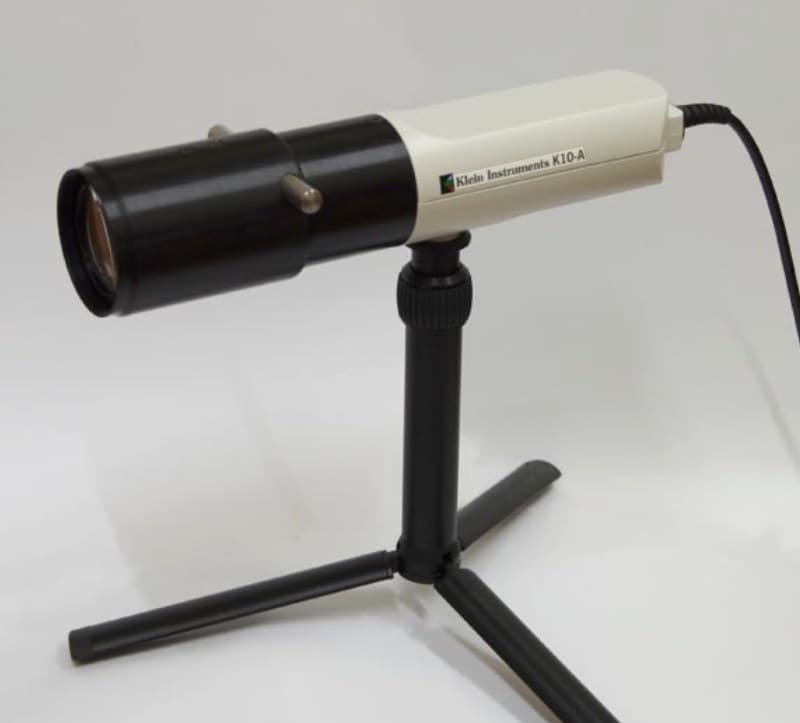
Klein K10-A
High-speed colorimeter with the sensitivity to read accurately near black — where OLED lives and cheap meters give up.

Every display has a story it was designed to tell. I use the same instruments and standards found in mastering suites to make sure yours can tell it. Find your setup below and request the right quote.
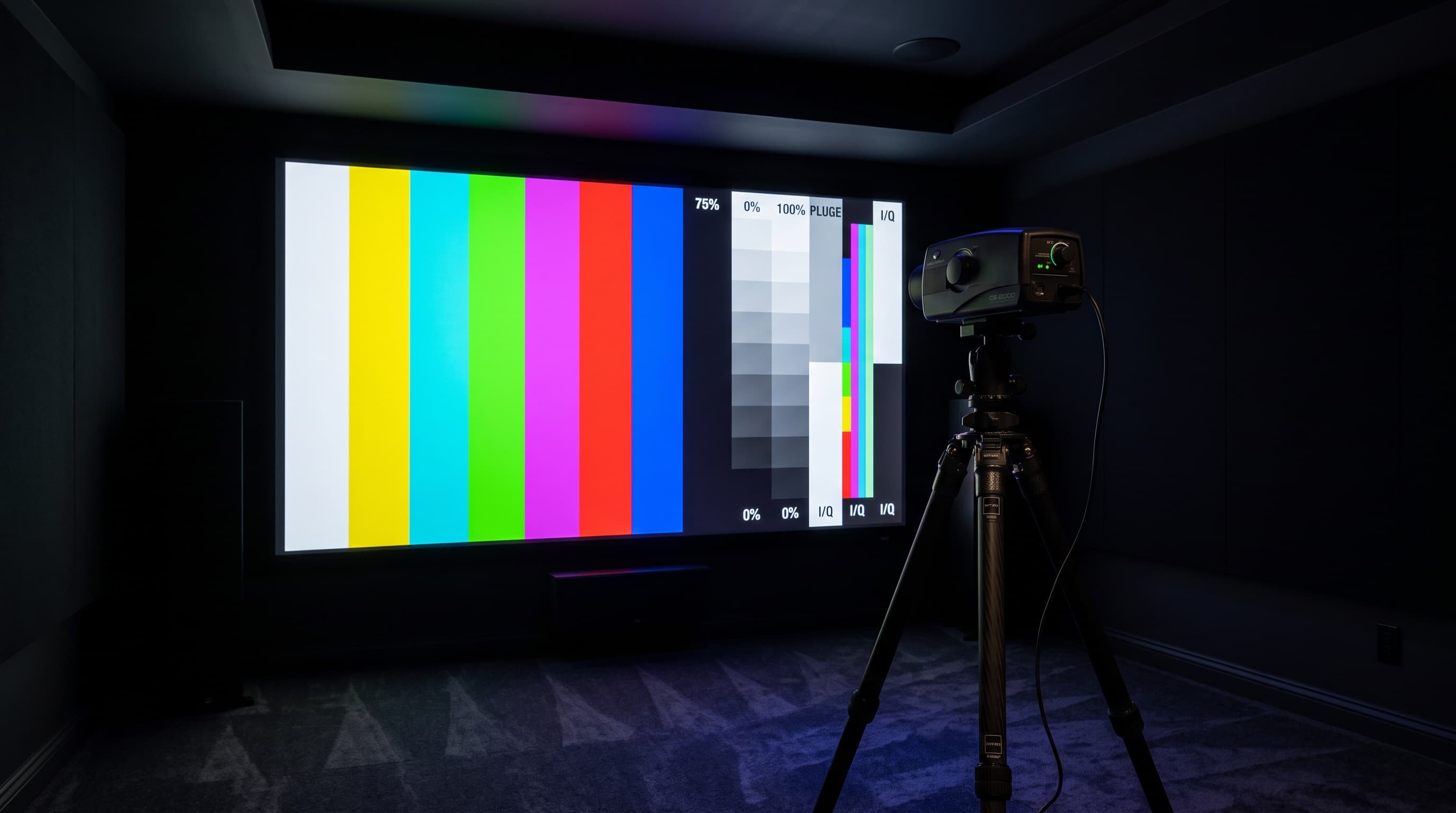
SIGNAL PATH · SOURCE → PROCESSOR → LENS → SCREEN
N0.01
Starting at $495
Your OLED was engineered for perfect blacks and infinite contrast. I tune it until it actually delivers them — accurate white point, clean grayscale, full color volume — on every input you use.
N0.02
Starting at $495
A projector is only as accurate as the screen and room it lives with. From single-chip DLP to tri-laser flagships, I calibrate to your screen's specific color targets and compensate for how your lamp or laser ages.
N0.03
Add-on · $99
HDR10, HDR10+, and Dolby Vision, tuned to your display's real peak luminance — so highlights land exactly where the mastering engineer set them.
N0.04
Add-on · $55
Accuracy without input lag. I calibrate your game mode in both SDR and HDR, then verify the signal path — VRR, 4K120, console and PC — so nothing between you and the frame is guessing.
N0.05
A dedicated theater isn't a display — it's a system. I dial in projector, processor, and ambient light together, so the room performs as one instrument.
N0.06
Color-critical environments where the picture is the product: editing suites, broadcast monitors, screening rooms, conference displays, and digital signage — matched across displays and documented for compliance.
Tone mapping, scaling, and color conversion all happen before the light ever hits your screen. Done poorly, they clip highlights and shift color no calibration can recover — which is why the processor belongs inside the measured chain, not bolted on after.
When the chain includes a madVR Envy, I profile and calibrate it as part of the same system — so every frame is corrected source to screen, against your room's real targets.

A projector can only reproduce what the surface in front of it gives back. Gain, ambient-light rejection, and the material's own color shift all land in the final measurement — which is why I calibrate to your screen's specific targets rather than a generic profile.
As an authorized Stewart Filmscreen dealer, I can spec and supply the right material for your room and throw distance, then calibrate the projector against it as one system.
SCROLL — WATCH THE MEASUREMENT LOCK TO STANDARD.
CALMAN SESSION · REC.709 · D65
PASS 01/05 · CONSULT
GRAYSCALE ERROR
ΔE 0.8
TARGET ΔE < 1.0
REFERENCE LOCK
We talk through your displays, your room, your sources, and how you actually watch. I recommend the right service and quote it plainly — no upsell, no mystery line items.
Before I touch a setting, I measure the display exactly as it is — grayscale, gamut, gamma, EOTF — and record where it drifts from reference. This is the "before" in your report.
Parameter by parameter, I bring the display to standard: brightness, color, grayscale, gamma, color gamut, HDR — measured against ISF reference patterns, not judged by eye.
Then I measure everything again. Every reading has to land at reference — not near it, at it. If a value won't hold, I keep working until it does.
You receive a detailed before/after measurement report showing exactly what changed and where your display now stands. Every claim I make ends up in writing.
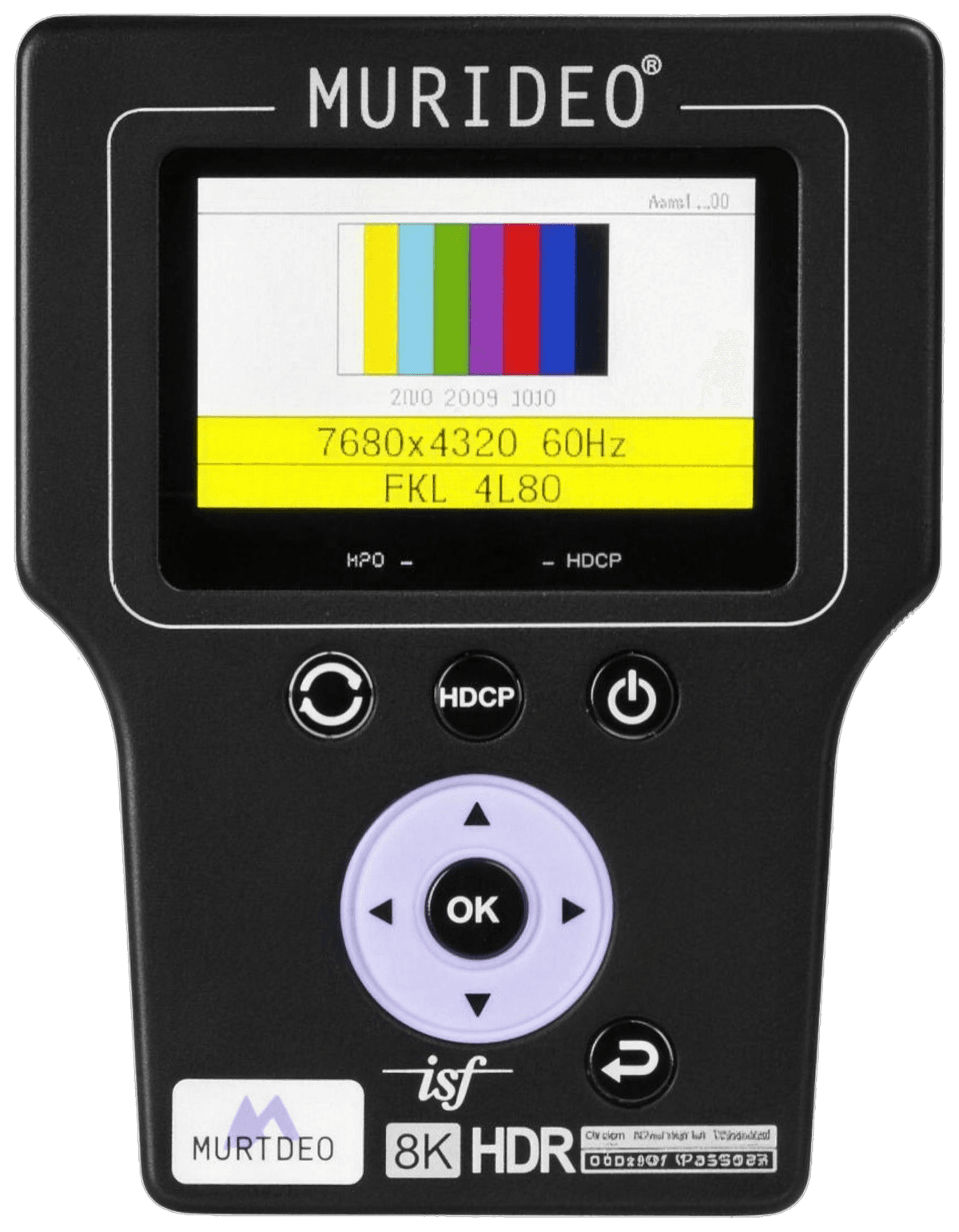
Calibration is only as trustworthy as the meter doing the measuring. This is the kit I bring to every job.
SPEC 01
High-speed colorimeter with the sensitivity to read accurately near black — where OLED lives and cheap meters give up.
SPEC 02
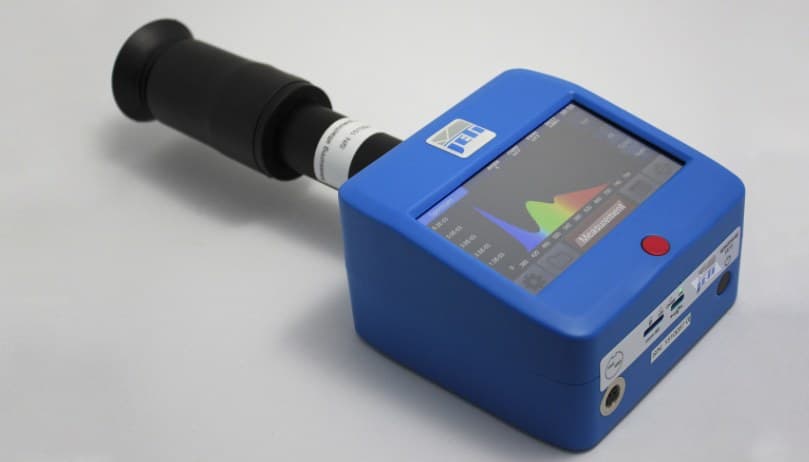
Laboratory-grade spectroradiometer that profiles your display's actual spectral output — the reference every other reading is corrected against.
SPEC 03
The professional calibration software used in Hollywood mastering and post-production facilities, driving and logging every measurement.
SPEC 04
Signal-accurate test material from the Imaging Science Foundation — so the display is judged against the standard, not a guess at it.
Tell me about your setup — displays, room, how you watch — and I'll recommend the right approach with a transparent quote.